Number Stacks
 Updated
Using Number Stacks in school
Number Stacks is an intervention program which helps pupils develop their understanding of number and calculation through video tutorials and practical activities using stackable place-value counters. It is designed for one-to-one support but can also be used with small groups. The adult and pupils watch each tutorial together, pausing to complete the activities and discuss their understanding. Sessions typically last 15–20 minutes, with at least three sessions a week recommended.
Assessment and progression
When a pupil begins the Number Stacks intervention, an initial assessment is carried out for the relevant unit (skill) to identify the pupil’s starting point, including any gaps in earlier learning. Each skill has two questions; Number Stacks advises stopping when both questions for a skill are answered incorrectly and beginning the tutorials at that point.
During sessions, use pupils’ responses and practical work to identify misconceptions and provide further practice. Each tutorial ends with a fluency activity to assess whether the pupil is ready to move on. This evidence should be used to inform assessment judgements against the relevant objectives, revisiting skills and using additional fluency activities where further consolidation is needed.
For more in depth information about how Number Stacks works please see this video.
Number Stacks and Insight
Insight’s partnership with Number Stacks, means that you can access the Key Skills framework descriptors and record pupil’s achievements against them in your Insight Account.
Adding the Number Stacks Key Skills Framework
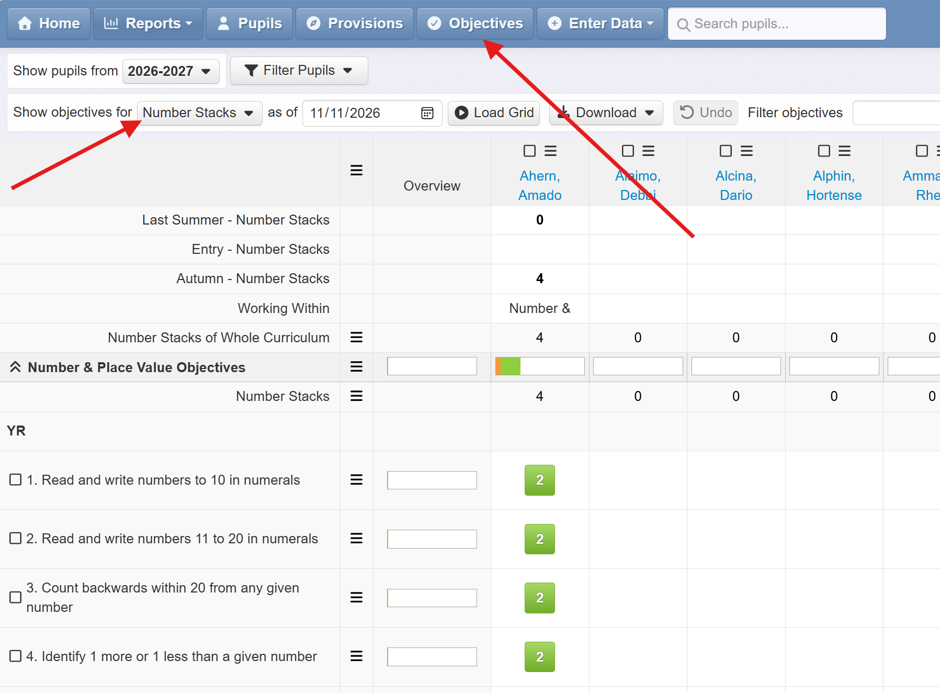
Admin users can add the Number Stacks Key Skills Framework to Insight through our Suppliers pages. You’ll then have access to the framework, which is free to use and, once added to your account, will be available via the Insight Objectives tab:
Adding Skills Assessments and Evidence
The Number Stacks Objectives collection is organised into the 5 sections of Key Skills and these are in the order that pupils would move through the intervention:
- Number and Place Value
- Addition and Subtraction
- Multiplication and Division
- Fractions
- Decimals
When using this intervention, pupils will always begin with the Number and Place Value skills. The principle behind the program is that a pupil will secure their Number and Place Value skills first (up to whatever year group level is appropriate for that pupil) before moving onto the next section, Addition and Subtraction. This is because the pupil needs to have secured their Number and Place Value understanding before being able to attempt Addition and Subtraction. Therefore, not every pupil will be assessed for every skill. The video below explains this in more depth:
The Number Stacks Objectives framework is not intended to be used, therefore, to produce an assessment 'measure'. It is intended as a place where staff working with the pupil can identify and record which skill the pupil is working on and to keep supporting evidence.
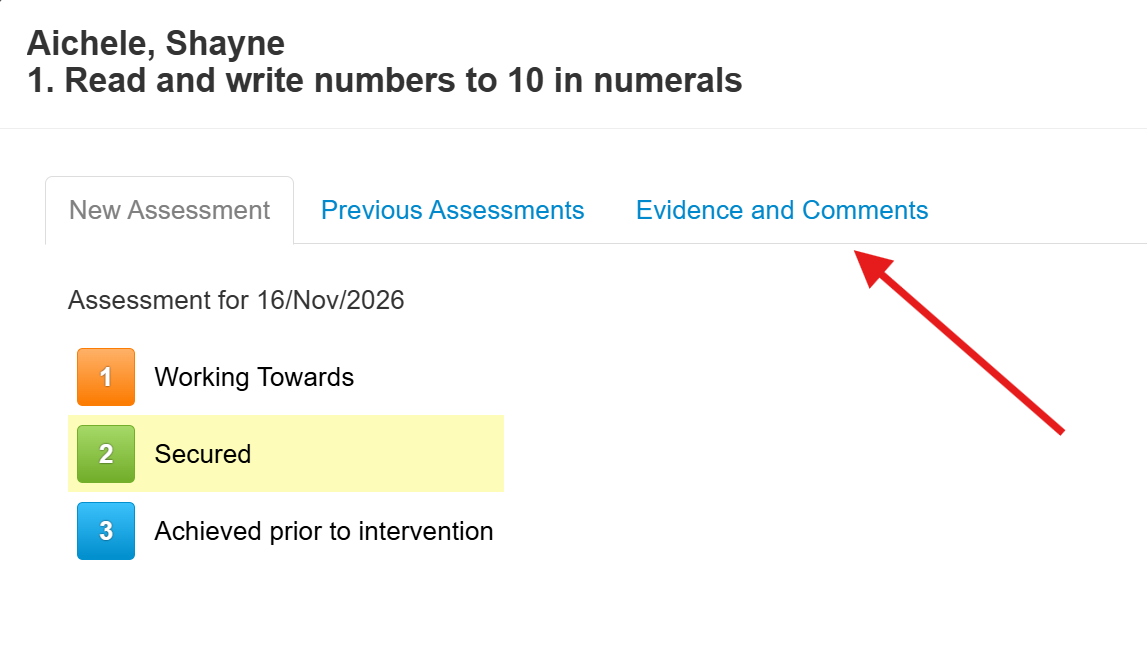
To enter an assessment within the Objectives collection, click on the relevant box under the pupil's name and next to the key skill, and you will see a drop down menu of marks:
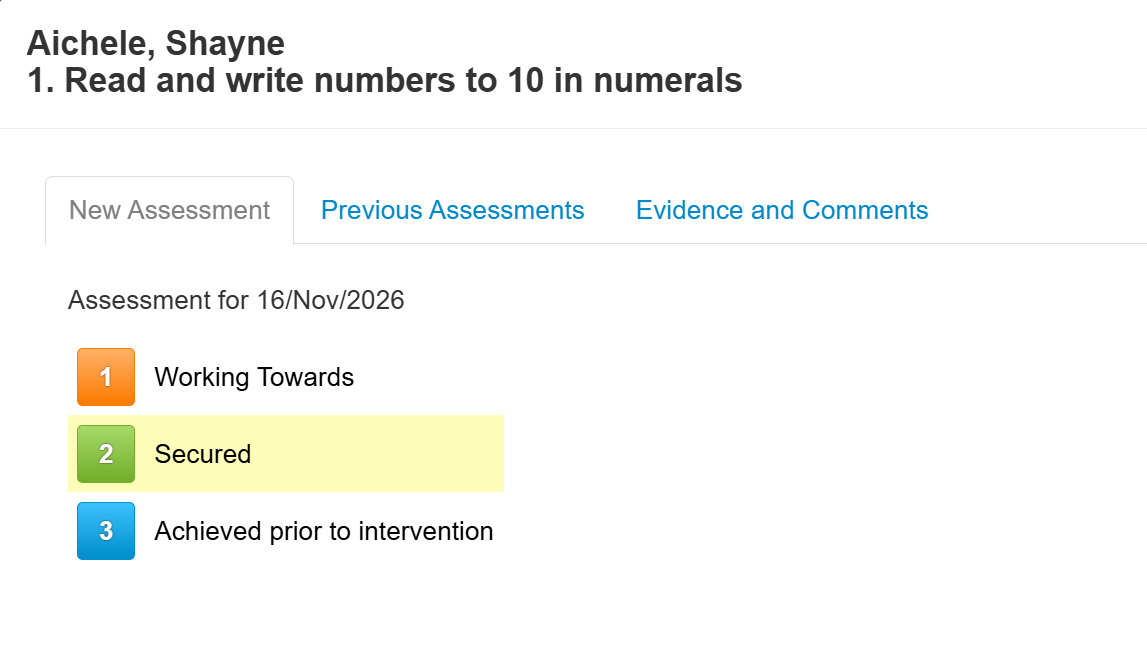
When conducting the initial assessment for the pupil, choose the Blue option from the marks to identify skills that they have already secured.
Then, as you work through the program, you can enter assessments as you are working with the pupil to show whether they are working towards that skill (Orange) or have secured it (Green). Each time you enter an assessment it will be date stamped. , Evidence can be added in the form of notes of photographs here too:
Evidencing Progress
There are a number of ways in which the Number Stacks Objectives will help you to evaluate and evidence the progress that a pupil is making through this intervention program.
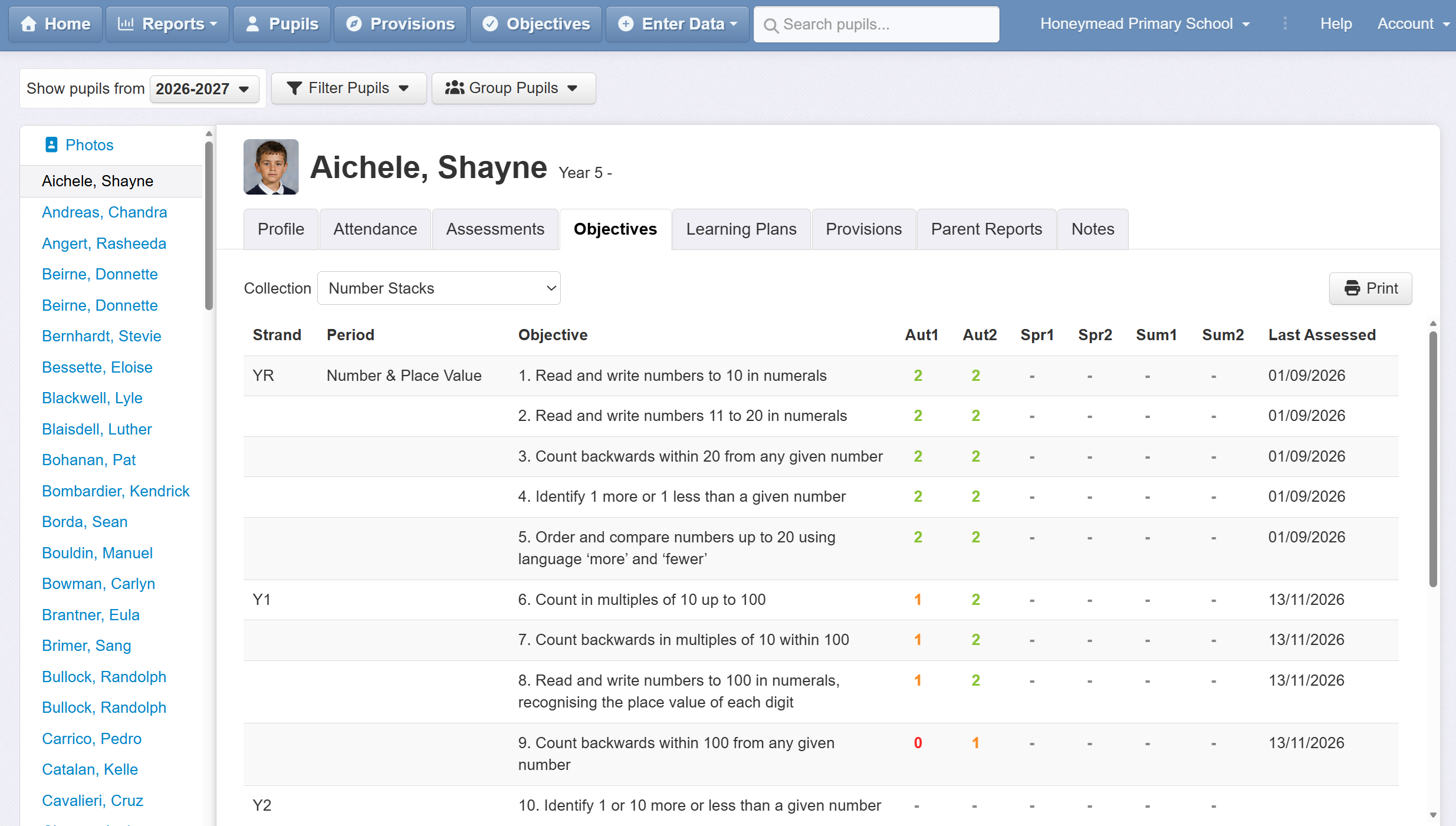
By visiting a Pupil's Page and going to the Objectives tab, you will be able to select the Number Stacks Objectives from the drop down menu. This will allow you to see what skills have been assessed, and where the pupil is currently working within the intervention program. This also gives a very clear picture, for individual pupils, of how they are progressing through the Number Stacks program:
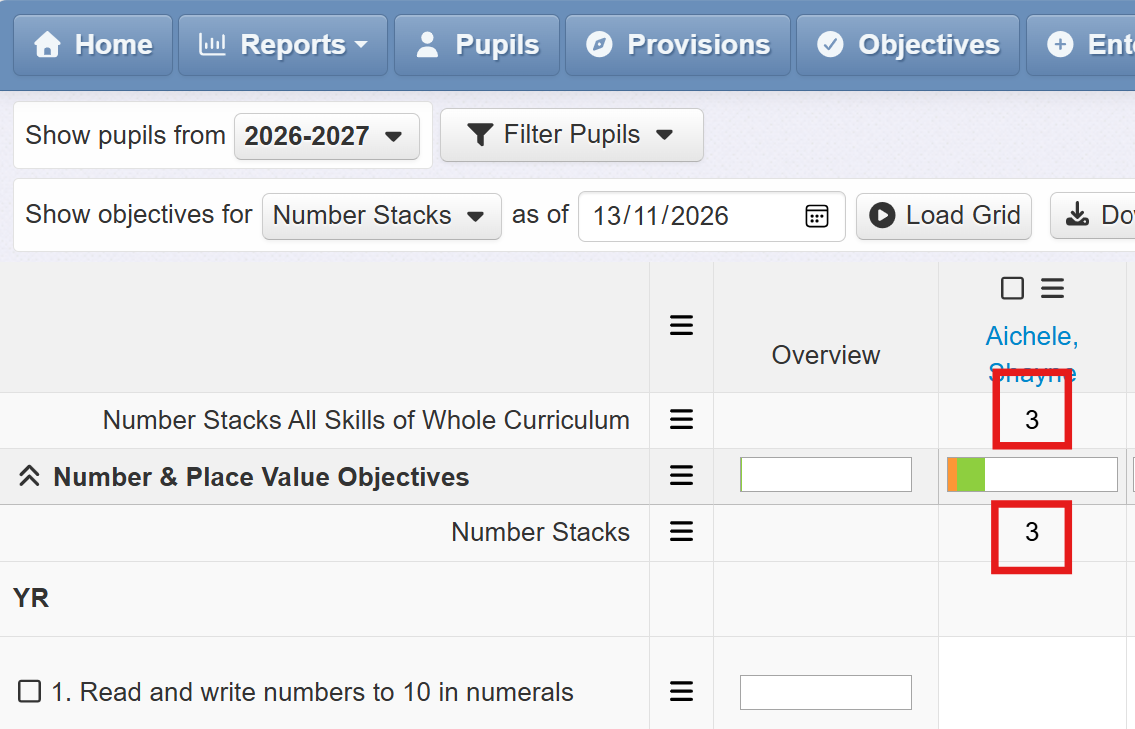
Within the Number Stacks Objectives collection, you will also see a count for how many skills the pupil has secured both as a count across all 69 skills and also for each Key Skill Section (if you cannot see this in your collection, then you can add these summarisers yourselves or ask our Support Team to add these in for you):
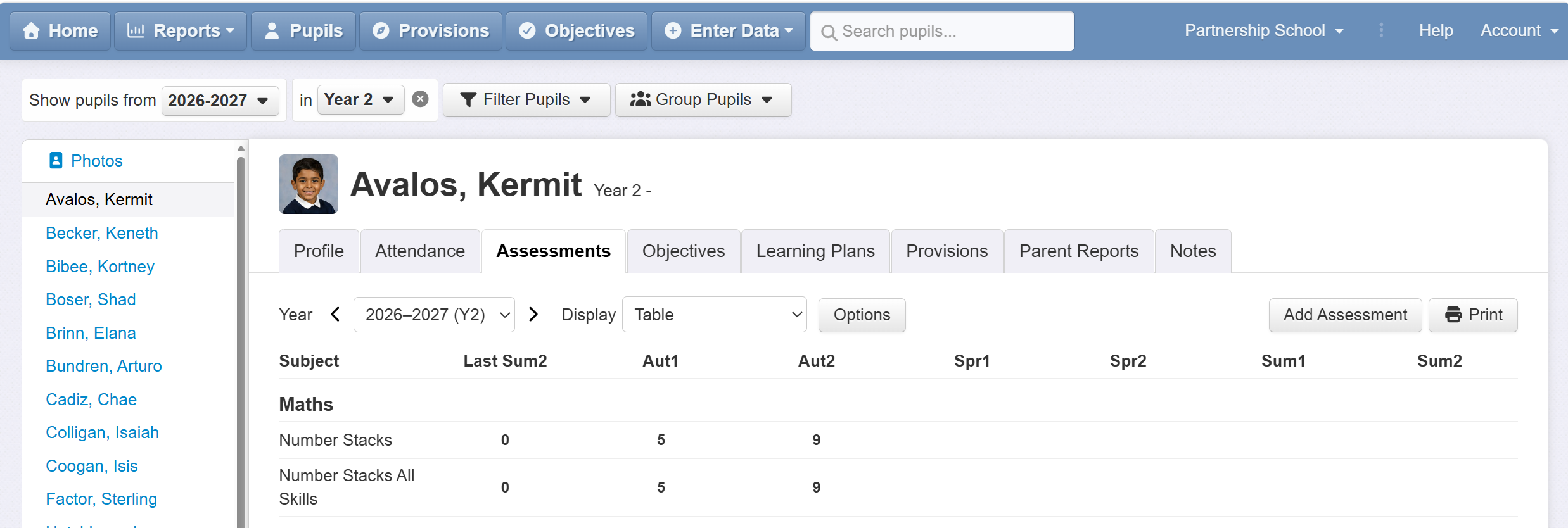
Again, if you visit the Pupil's Page and this time go to the Assessments Tab, you will see the score for this pupil under the subject 'Maths.' You will be able to see, for this individual pupil, if the number of key skills secured by this pupil is increasing over time:
This key skills count can also be added to a Tables Report, if you wish to track the progress of all pupils taking part in the intervention:
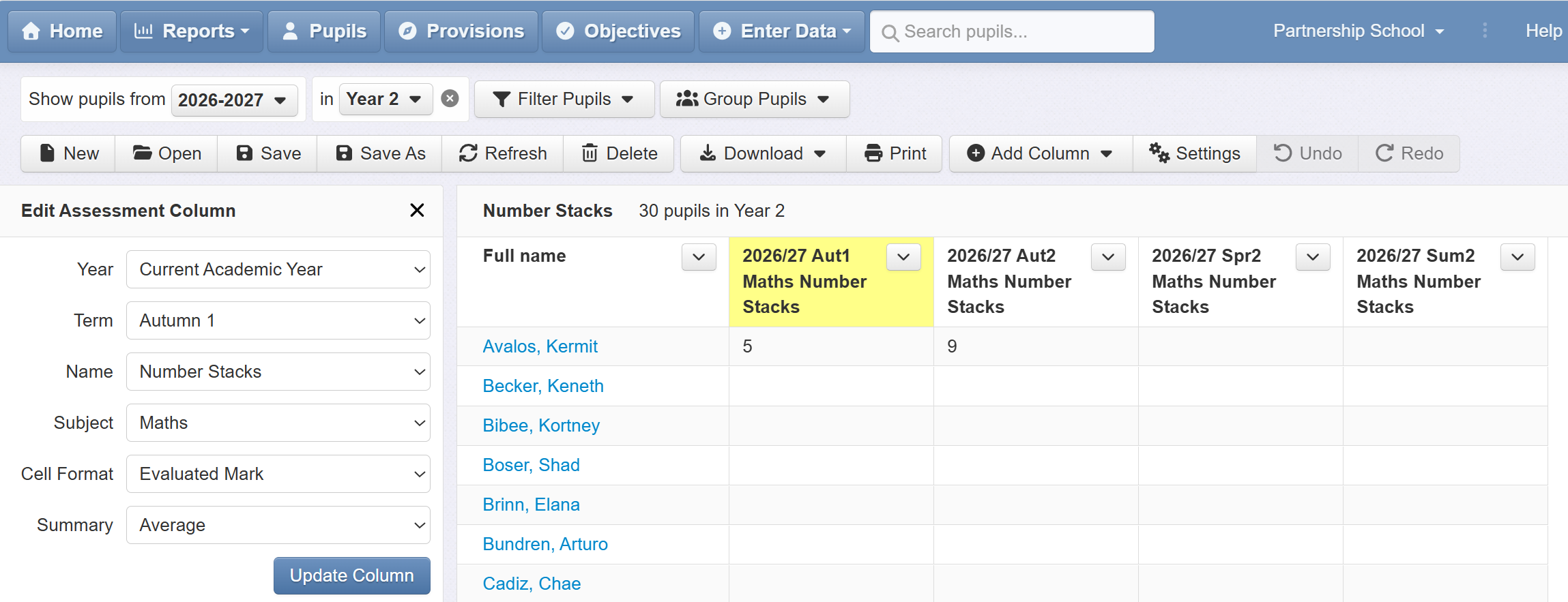
If you have set up Number Stacks as a provision type and group within the Provisions area of Insight, you will also be able to filter the pupils in the table for those taking part in the Number Stacks intervention.
Summative Assessment Set Up
As previously mentioned, Number Stacks is not intended to produce any form of summative assessment. However, some schools have enquired about being able to see, at a glance, what skill and year group a pupil is working on within the intervention.
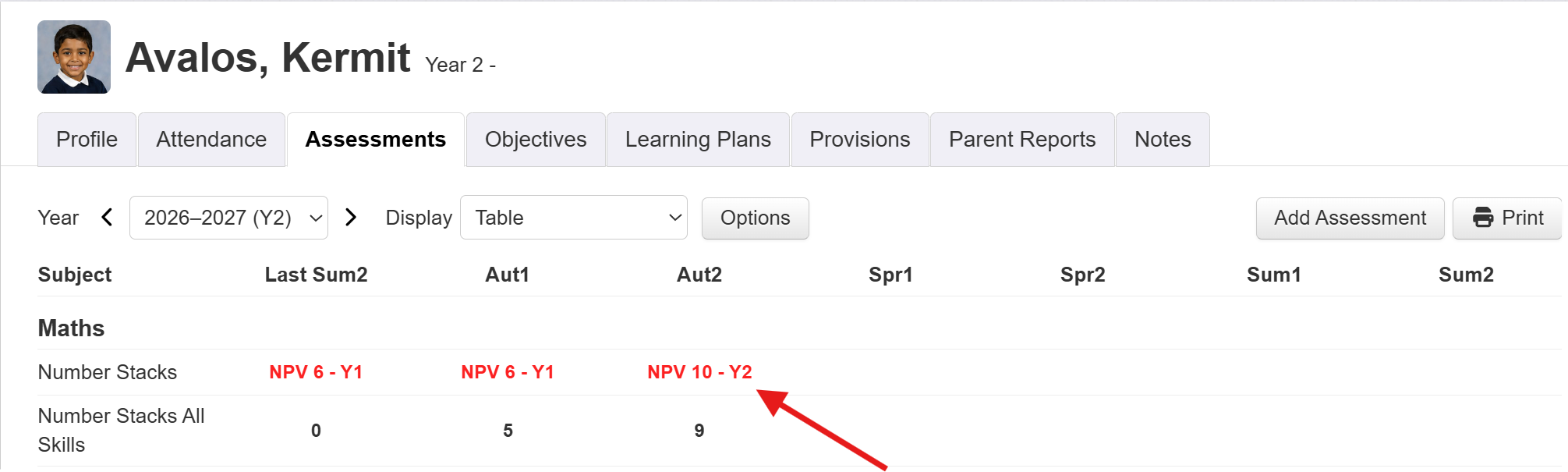
If you would like this added to your account, please contact our Support Team.
A Mark Scheme which will identify what Skill Section, Key Skill and Year Group the pupil is working on will be added and attached to an Assessment Name 'Number Stacks.'
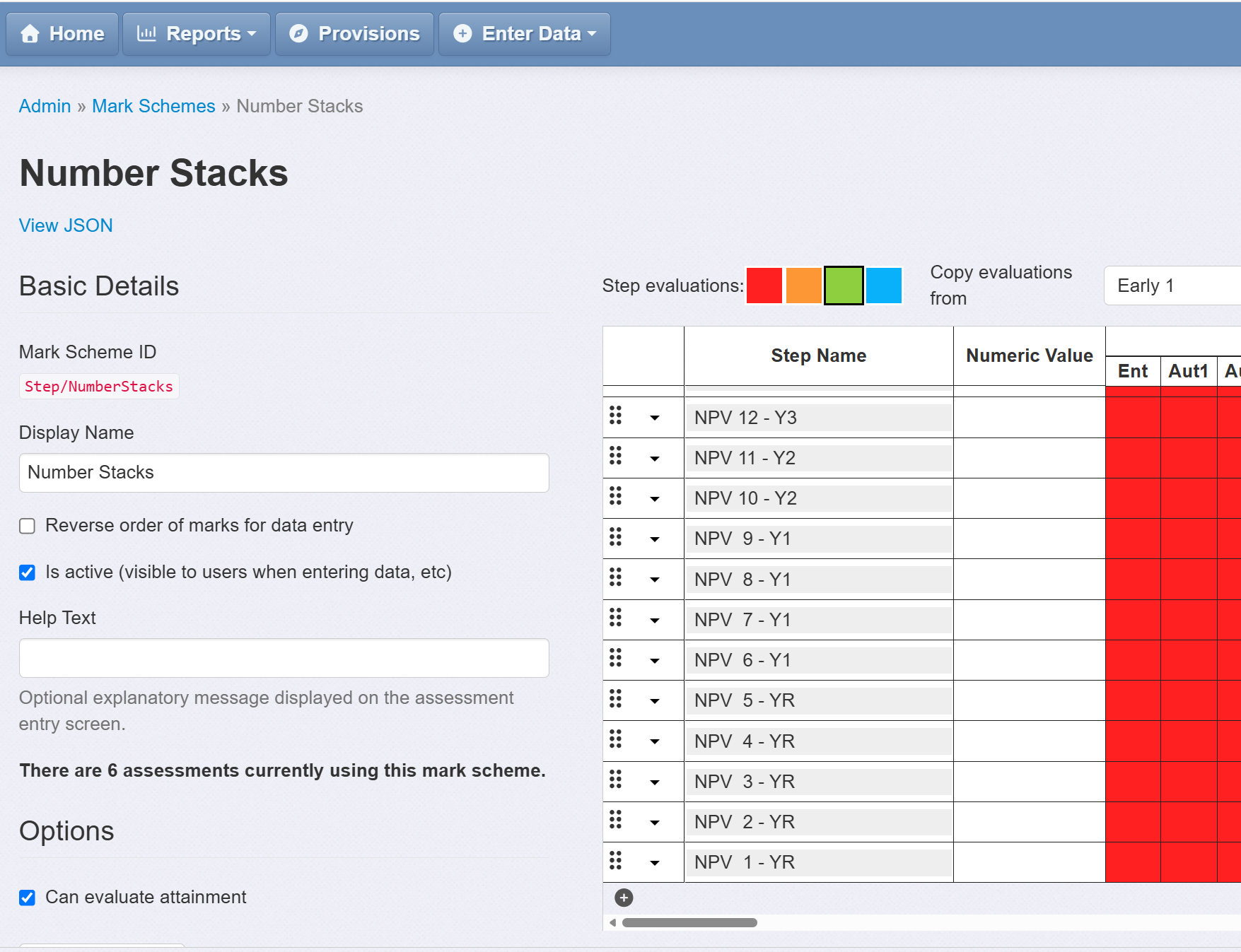
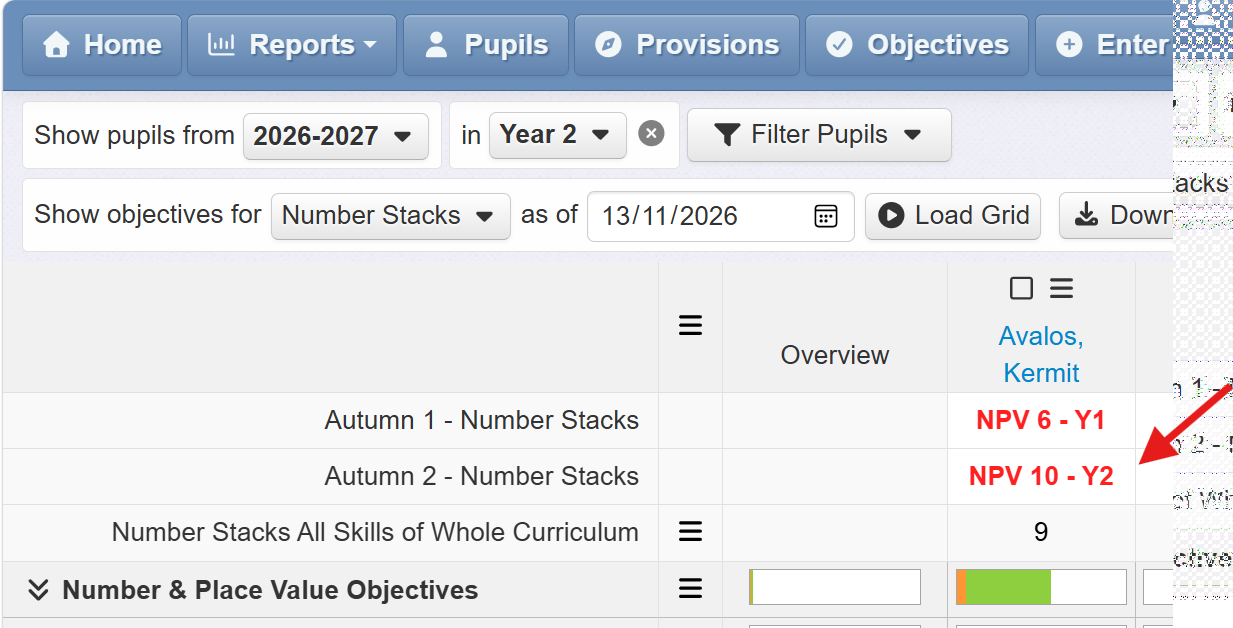
This can then be attached to your Number Stacks Objectives Collection, so that staff can manually add (Insight does not do this automatically) what Key Skill a pupil is working on at any assessment point:
Learning Plans
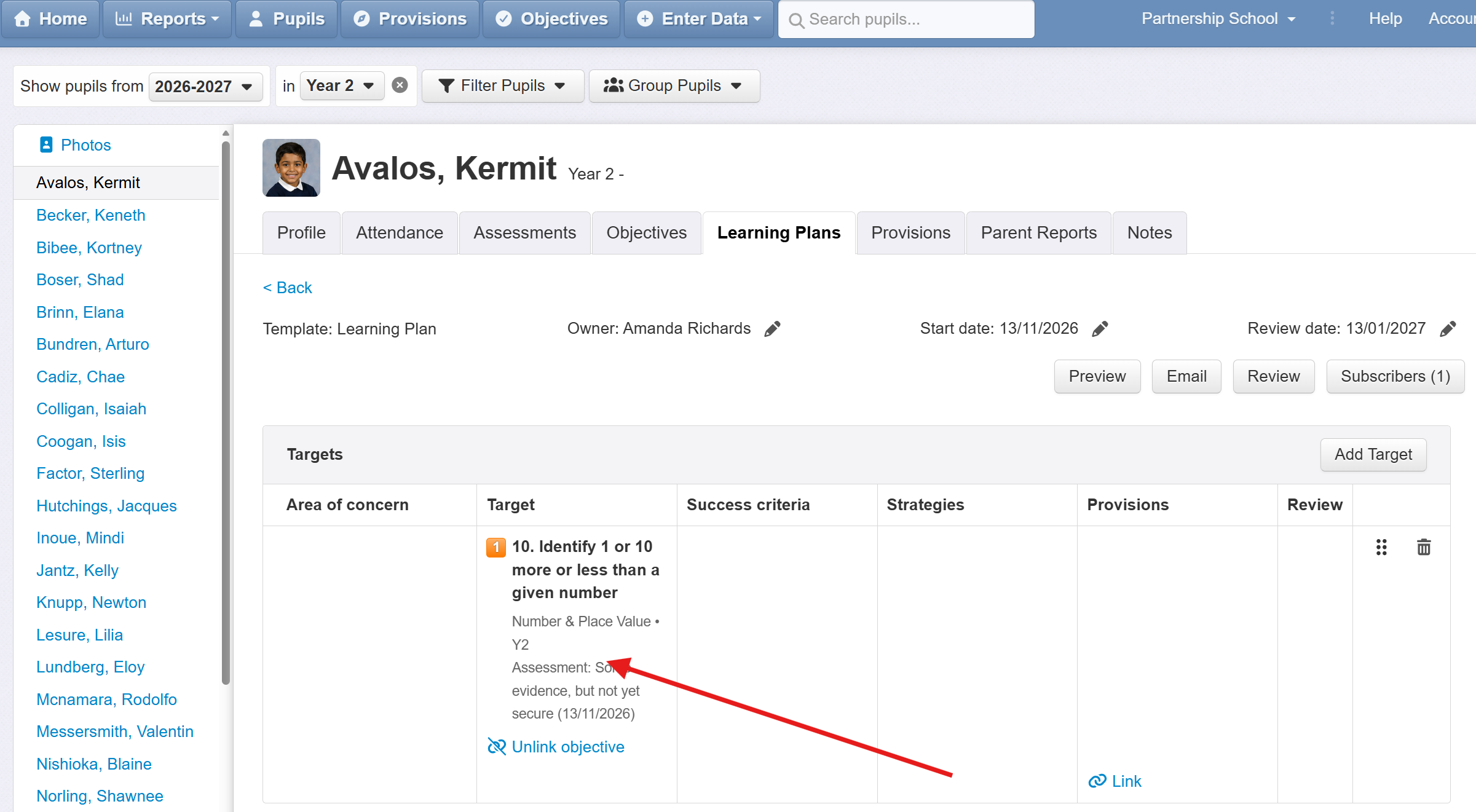
If you are using Learning Plans in Insight, then you will also be able to attach Number Stacks objectives to your targets: